
Are composting toilets the future of caravanning… or just an expensive bucket of sawdust with a fan attached?
Today we’re going to break down what composting toilets actually are, how they work, what they cost, which RVs in Australia offer them… and whether they’re worth it for you.
- WHAT IS A COMPOSTING TOILET?
- THE OTHER TYPES OF RV TOILETS (AND WHY PEOPLE REPLACE THEM)
- WHY COMPOSTING TOILETS HAVE A FAN CLUB
- THE NOT-SO-SEXY SIDE OF COMPOSTING TOILETS
- HOW MUCH THEY COST IN AUSTRALIA (AUD)
- WHICH AUSTRALIAN CARAVAN BRANDS OFFER THEM
- REAL USER EXPERIENCES (PARAPHRASED)
- WHO THEY SUIT — SOLO, COUPLES, FAMILIES
- SO… GAME CHANGER OR GIMMICK?
- CONCLUSION
WHAT IS A COMPOSTING TOILET?
Before we get into pros, cons, brands and costs, we should probably make sure we’re all talking about the same thing.
A composting toilet is basically a loo that separates liquids and solids.
Solids fall into a chamber filled with coconut coir or sawdust, and liquids go into a separate bottle or tank. A tiny fan vents moisture and smells outside.
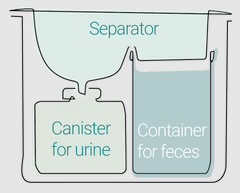
And despite the name, it’s not actually composting like you’d put on a garden. It’s more “drying out your poo so it’s less gross.”
So now that we know what we’re comparing… let’s quickly look at the other options caravanners use.
THE OTHER TYPES OF RV TOILETS (AND WHY PEOPLE REPLACE THEM)
Cassette Toilets
These are the classic RV toilets. They flush, they go into a small cassette, and you empty it every couple of days. They work fine — until you’re free camping a lot. Then the “every couple of days” part becomes very… motivating to explore other options.

Macerator Toilets
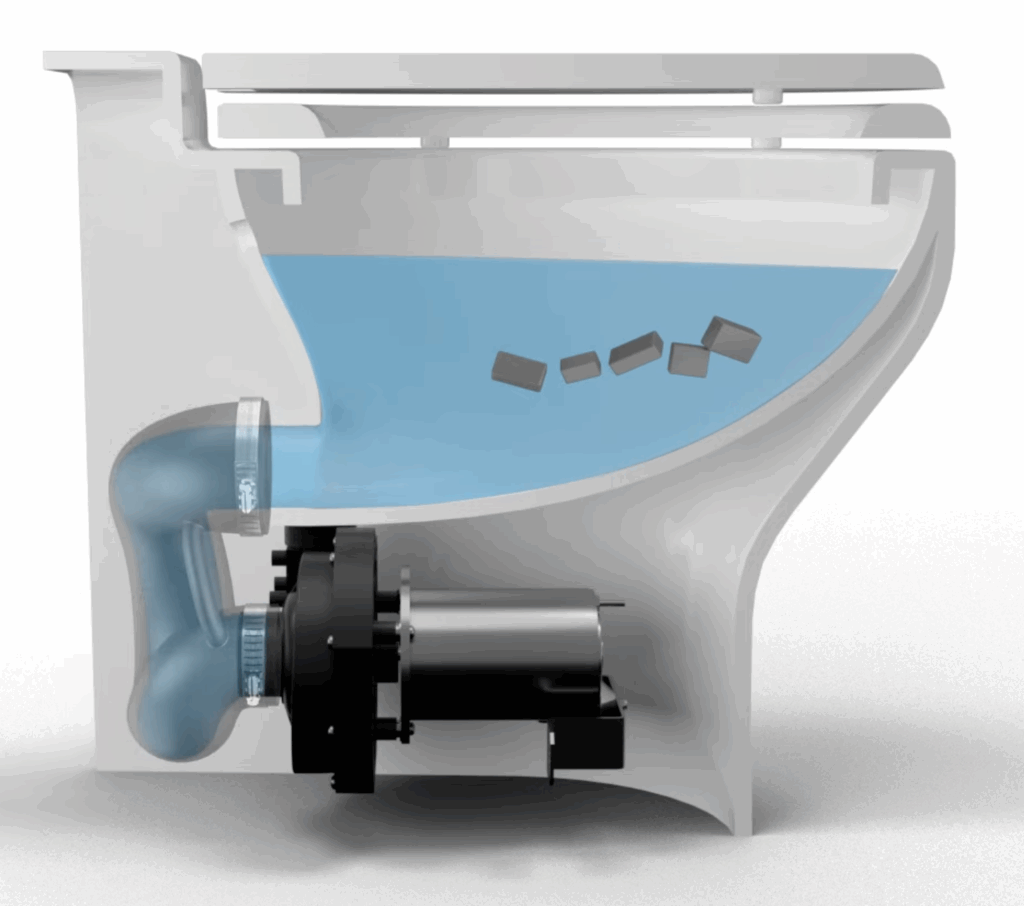
Macerator toilets look and feel like a normal household loo, but behind the scenes they use a small motor to grind everything into a slurry and pump it to a holding or black tank which you then pump out to a dump point.
The upside is a very “normal” toilet experience — no chemicals, no cassettes, no bending and twisting at dump points. The downside? They’re more complex, rely on power, and if the pump decides to stop working… well, let’s just say it becomes a Very Bad Day very quickly.
Dry-Flush Toilets
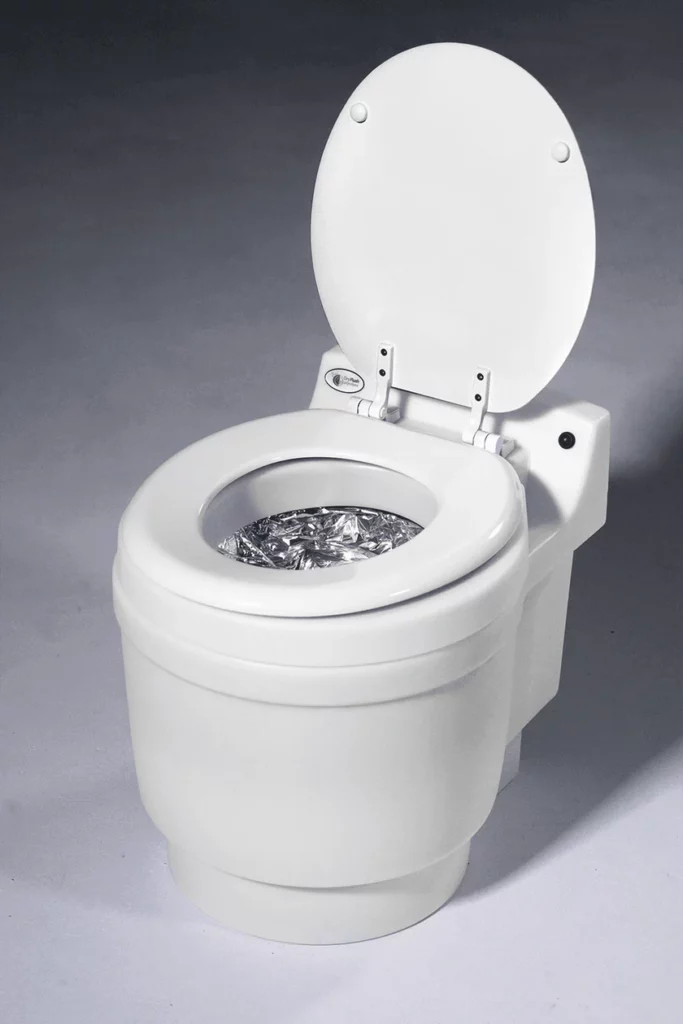
These wrap your waste in a sealed bag after every use. They’re brilliant for vans and tiny campers, but every flush costs money because those replacement cartridges aren’t cheap.
And this is where composting toilets slide in with a smug little smile, like, “Hi, I use zero water, zero chemicals, and you have to empty me way less.”
So let’s talk about why people love them.
WHY COMPOSTING TOILETS HAVE A FAN CLUB
People aren’t paying $1,200–$2,500 for fun. Composting toilets have some genuine benefits, especially for off-grid travellers.
Longer off-grid stays
This is the big one. Solids can last two to four weeks for a couple. That’s a massive improvement over a cassette.
No chemicals, no blue goo
If you hate the smell of chemicals or want fewer harsh products in your caravan, composting toilets are a breath of fresh, well-ventilated air.
Surprisingly little smell
This is the thing that shocks everyone. Because the liquids are separated from the solids and the fan runs constantly, the toilet actually smells less than a cassette toilet. Inside, you smell nothing. Outside… well, maybe don’t stand too close to the vent on a windy day.
Zero water usage
If you’ve ever run out of fresh water on day three of a week-long trip, the idea of a no-flush toilet becomes very attractive.
But — because nothing in caravanning is perfect — let’s talk about the downsides.
THE NOT-SO-SEXY SIDE OF COMPOSTING TOILETS
The people who love composting toilets love them loudly. The people who don’t… also love to tell you about it.
The liquids bottle
Let’s just be honest: this is the least glamorous bit. Even with two people, you’re emptying it every day or two. For some people, that’s fine. For others, that’s enough to say “nope.”
The upfront cost
A composting toilet costs between $1,200 and $2,500+ AUD. That’s a lot of money for something that technically doesn’t even flush.
It’s not magic compost
People imagine that after two weeks you open the solids bin and it has transformed into fluffy potting mix. It hasn’t. It’s drier, far less smelly, and way easier to handle… but it’s still waste.
Installation isn’t plug-and-play
You need a vent to the outside. Some caravans are set up nicely for this. Others… not so much.
Now that we know the good and the not-so-good, let’s answer the next question: what does this actually cost in Australia?
HOW MUCH THEY COST IN AUSTRALIA (AUD)
Depending on the brand, you’re generally looking at:
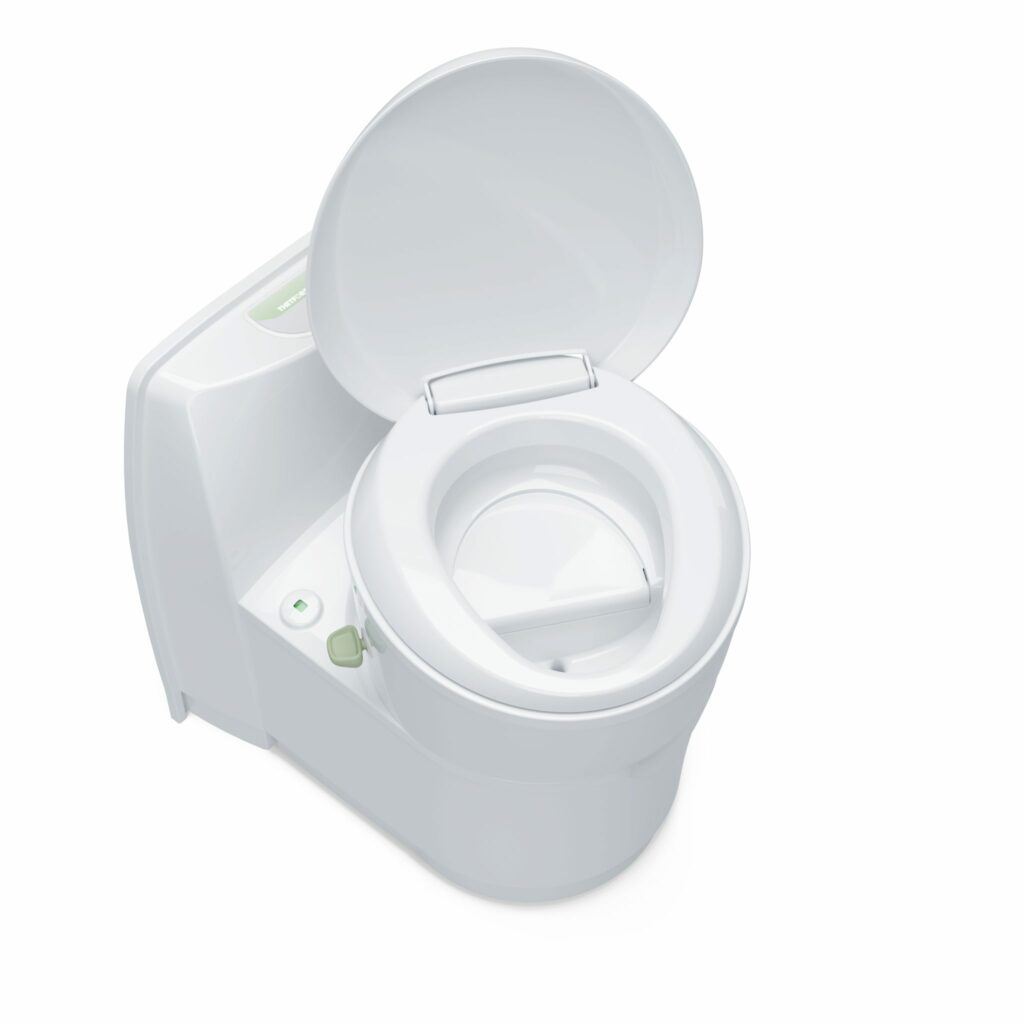
Thetford Separation Toilet — $1,400
(coming October 2026)
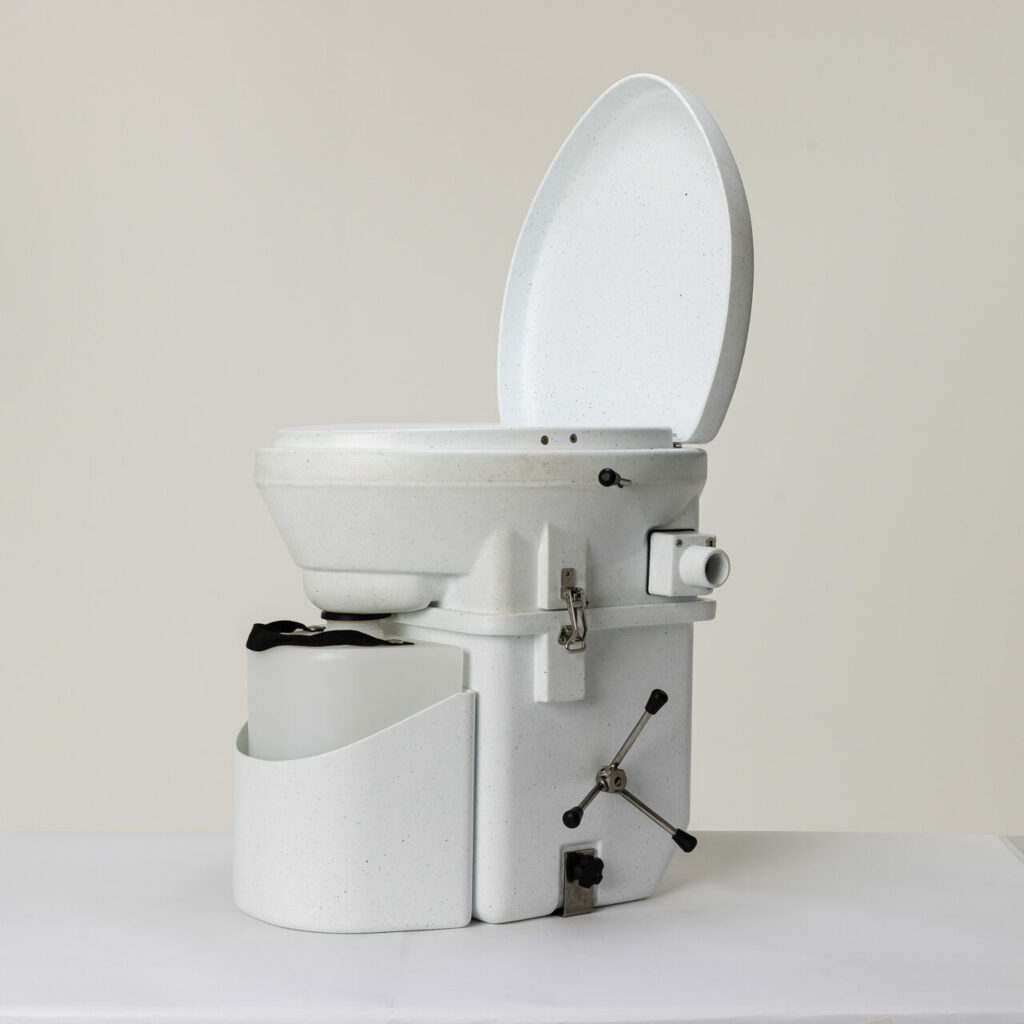
Nature’s Head — $1,900
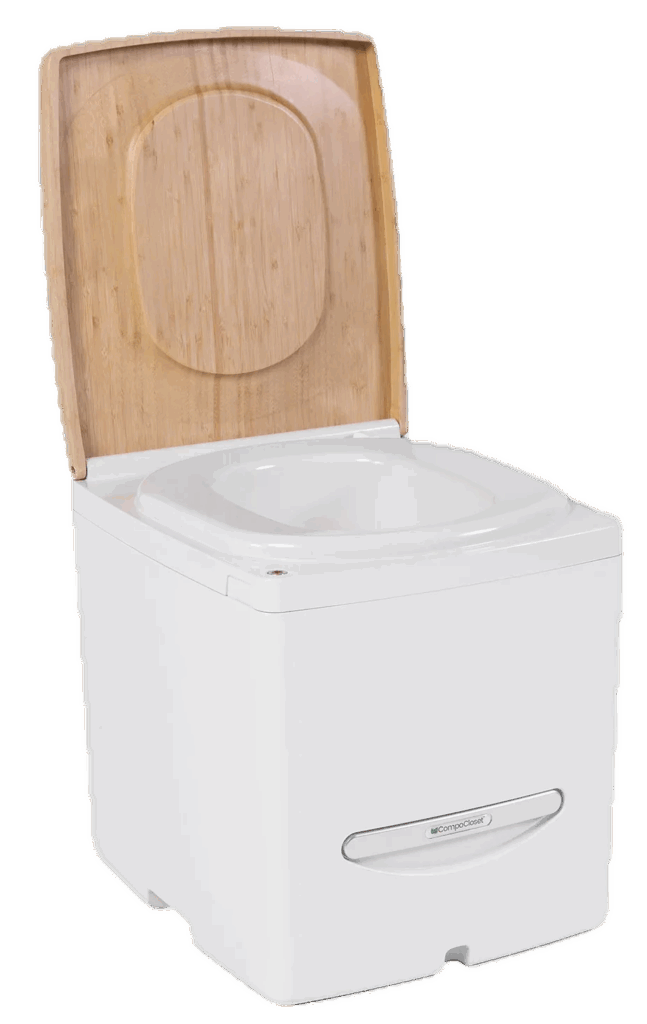
Cuddy — $1,500 to $1,900
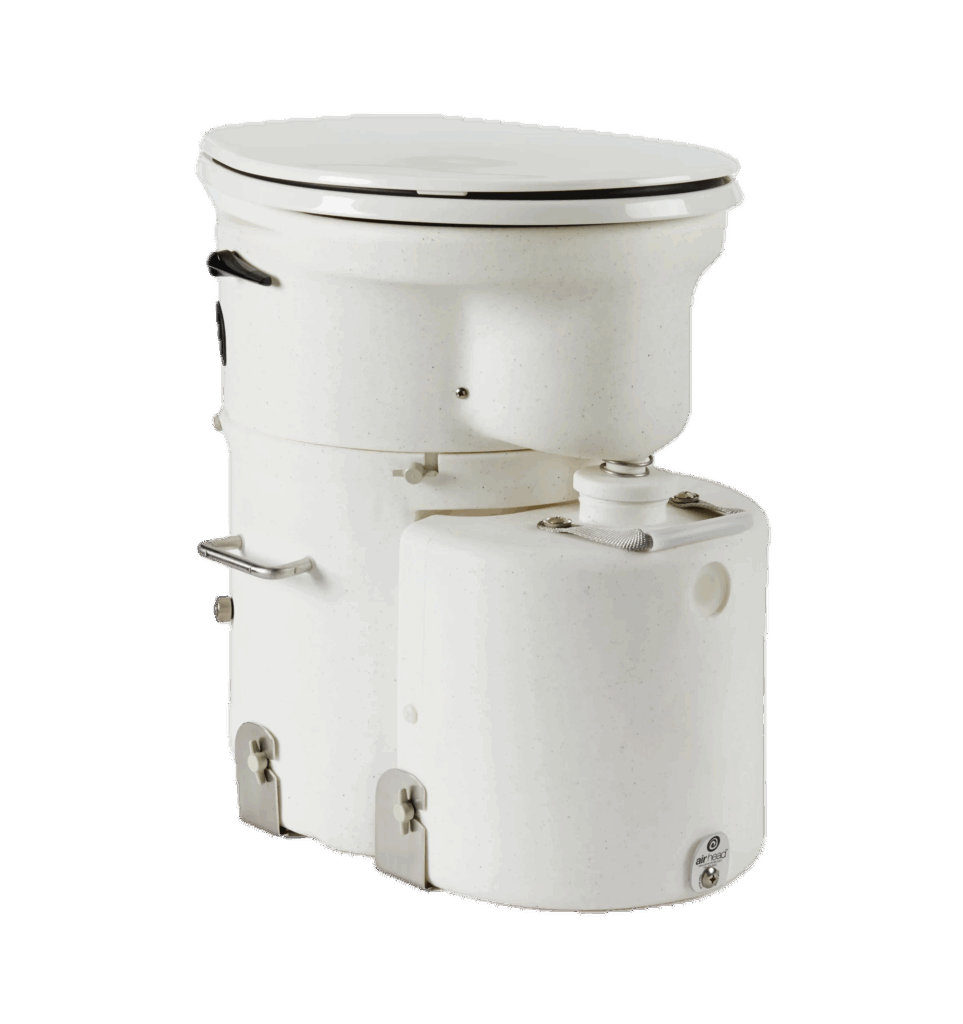
Air Head — $1,600 to $2,000
Simploo — $1,200 to $1,500

Separett Tiny — $1,800 to $2,100

Plus installation if your van doesn’t already have a vent.
WHICH AUSTRALIAN CARAVAN BRANDS OFFER THEM
Composting toilets are still niche, but they’re becoming more common — especially with premium off-road and hybrid manufacturers.
Brands where you can often see composting toilets as a factory option or custom build include:
- Australian Caravans Direct – Boundless
- AOR
- RhinoMax Campers
- Wallaroo Caravans
- Wonder Roo Caravans
- Zone RV
But, for most mainstream builders, it’s still an aftermarket upgrade which many of them offer — so the trend is definitely growing.
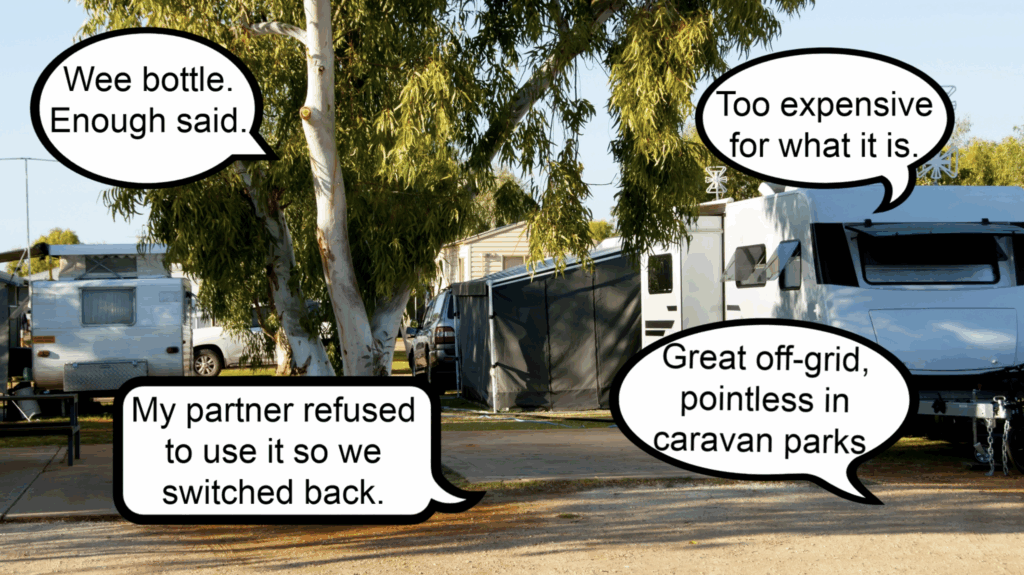
And of course, for every fan of these toilets, there’s someone with a horror story…
REAL USER EXPERIENCES (PARAPHRASED)
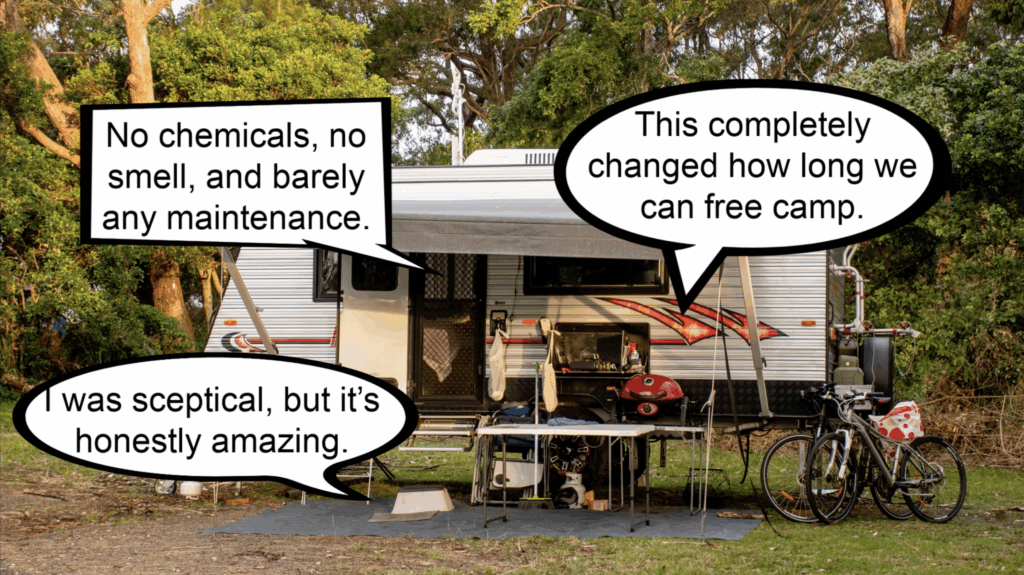
People who love them say:
People who don’t love them say:
WHO THEY SUIT — SOLO, COUPLES, FAMILIES
So who are composting toilets actually good for?
Solo Travellers
If you free camp a lot, composting toilets are kind of perfect. Solids take ages to fill, and maintenance is minimal. The only downside? You’re the one doing all the emptying.
Couples
For most off-grid couples, this is the sweet spot. Two to four weeks between solids empties is a dream. The only ongoing drama is the liquids bottle… but everything in caravanning requires a bit of teamwork, right?
Families
Okay. Here’s where it gets tricky. Kids can fill a solids bin incredibly fast, and some kids (and honestly some adults) look at a composting toilet like it’s a medieval torture device. For families, it’s only worth it if you free camp constantly.
SO… GAME CHANGER OR GIMMICK?
Game changer if:
- You free camp more than half the time
- Dump points drive you mad
- You want maximum time off-grid
- You don’t mind dealing with the liquids bottle
Gimmick if:
- You mainly stay in holiday parks
- Your cassette toilet works fine
- You’re not keen on any extra “handling”
They’re not perfect — but for off-grid travellers, they absolutely solve a very real problem.
CONCLUSION
So that’s composting toilets — the good, the bad, and the slightly damp. For some caravanners they’re genuinely life-changing, and for others they’re just an expensive experiment. Hopefully this gave you a clear picture of what to expect.